
Interior wooden stairs
Practical guide to choose, design and maintain indoor stairs with aesthetic and functional criteria.
Interior wooden staircases are much more than a connecting element between floors. Today they have become a key element of interior design, capable of defining the style of a home and providing warmth, character and visual continuity.
Choosing the right type of stairs, wood and finishes not only improves the aesthetics of the space, but also influences comfort, safety and long-term durability. In this guide you will find the essential criteria to make the right choice and keep your stairs in perfect condition.
Types of interior wooden stairs
Before choosing an indoor staircase, it is useful to know the main types and understand how they adapt to the available space, daily use and style of the house.
Straight interior wooden stairs
They are the most classic and functional option. Their linear layout facilitates daily traffic and provides a sense of order and visual continuity, especially in large homes or with open layouts.
Interior wooden spiral staircases
A very effective solution for small spaces. Their helical design makes it possible to take advantage of every centimeter and add dynamism to the interior. In homes where space is limited, wooden spiral staircases offer an interesting balance between functionality and design.
Interior stairs with landing
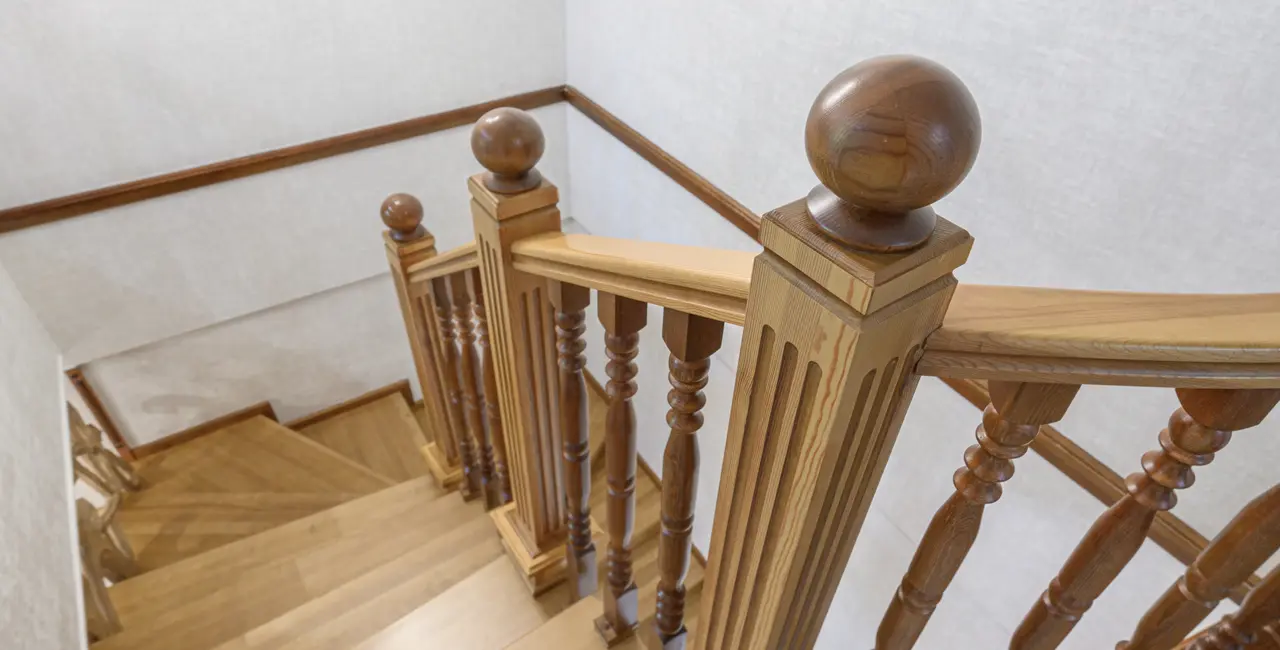
They incorporate one or more intermediate sections that improve comfort and safety. They are common in houses of various heights and allow the introduction of turns that visually enrich the route.
Floating wooden stairs
Very popular in modern and minimalist interiors. Their treads with no visible riser create a feeling of lightness and spaciousness, especially when combined with light railings or glass.
Mixed stairways: wood and metal structure
They combine the warmth of wood with the stability of metal. They are frequently used in lofts and industrial style homes, providing a contemporary and robust character.
Advantages of interior wooden stairs
Interior wooden staircases stand out for their versatility and ability to adapt to different decorative styles, from classic to modern interiors.
- They bring warmth and naturalness to the space.
- They are durable if good woods are combined with proper maintenance.
- They allow a high degree of customization in tones, veins and finishes.
- Most wear can be corrected without replacing the entire ladder.
The design of the wooden railings is key to reinforce both the safety and the aesthetics of the whole.
How to choose an interior wooden staircase
Space analysis
The first step is to study the available space, the height to be saved and the expected circulation. In large spaces, straight stairs or stairs with a landing work well; in small areas, spiral stairs or mixed designs optimize space.
Wood type and finish
Oak stands out for its hardness and durability, beech for its light tone and resistance, pine for its lightness and walnut for its natural elegance. The finish -varnish, oil or lacquer- influences both the protection and the final appearance. To go deeper into this aspect, it is essential to know how to varnish and protect wood correctly.
Safety and regulations
Interior stairways must meet basic safety criteria: non-slip treads, regular heights, firm handrails and adequate lighting. In Spain, these aspects are regulated by the Technical Building Code (CTE), which establishes minimum safety and habitability requirements.
Recommended materials
Hardwoods such as oak, beech or walnut are the most commonly used for interior stairs because of their stability and resistance to wear and tear. In many projects, hardwood stair treads are combined with hidden steel or laminated wood structures, achieving a balance between robustness and visual lightness.
Frequently Asked Questions
What type of wood is most recommended for interior wooden staircases?
Hardwoods such as oak, beech or walnut offer greater stability and resistance, making them the most recommended for interior use.
How often should the varnish be renewed?
It depends on the use, but it is normally reviewed every two or three years, bringing forward the renewal in areas of heavy traffic.
Are interior wooden stairs slippery?
Not necessarily. There are anti-slip varnishes and specific strips that improve safety without affecting the design.
Can a step be repaired without replacing the entire staircase?
Yes, in many cases it is sufficient to sand or replace the damaged step without intervening in the rest of the structure.
Conclusion
Interior wooden stairs combine functionality, design and durability. Choosing the right type, the right wood and applying proper maintenance allows you to enjoy a safe and aesthetic staircase for many years, making it a protagonist of the interior of the house.