
Modern wooden staircases: design, safety and current regulations
When design meets functionality
Within the range of wooden staircases, modern solutions stand out for their clean lines, combinations of materials, and greater attention to safety and current regulations.
Among the latest trends, floating wooden stairs represent one of the most sought-after solutions due to their clean and minimalist aesthetic.
In this article we analyze how modern wooden staircases are conceived, what design aspects should be considered, what safety requirements must be met and why regulations are a key factor from the project phase.
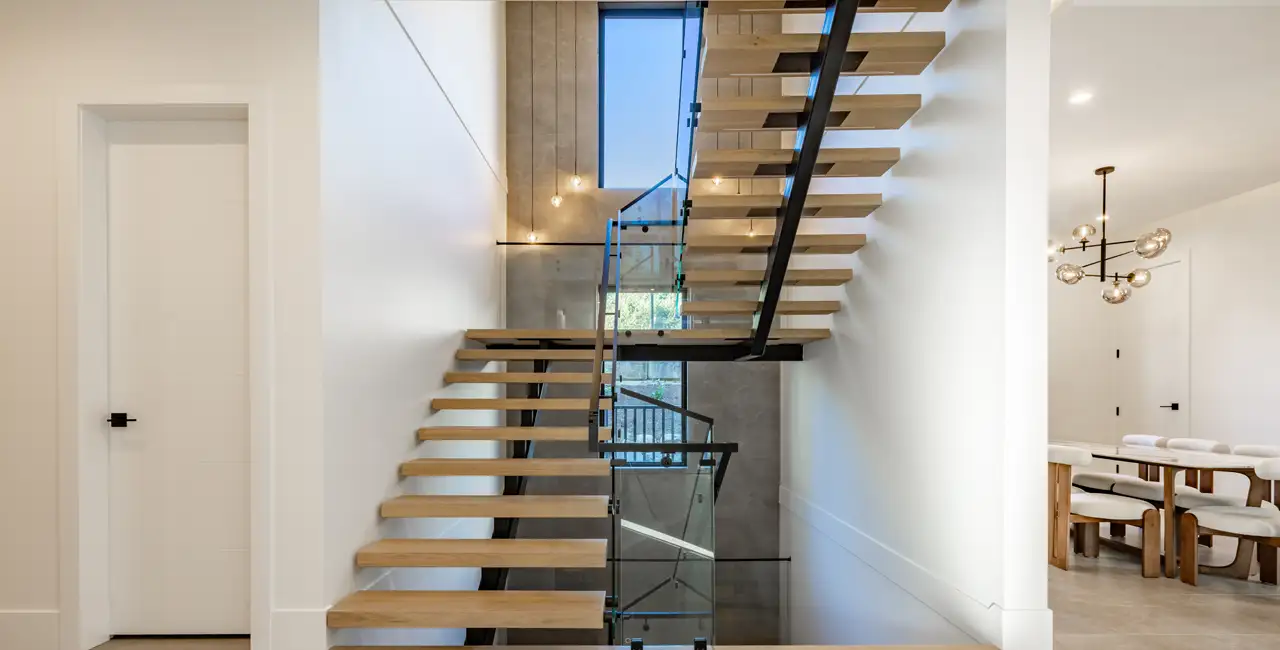
Table of Contents
- What do we understand today by a modern wooden staircase?
- Modern wooden staircase design: real keys
- Safety on modern wooden stairs
- Basic regulations affecting wooden staircases
- Modern staircases in new construction and renovation projects
- Errores habituales en escaleras de madera modernas
- When to opt for a modern custom-made wooden staircase
- Conclusion
What do we understand today by a modern wooden staircase?
A modern wooden staircase is not defined solely by its minimalist aesthetic. It is characterized by the balanced integration of design, functionality, and technology. The goal is for the staircase to blend seamlessly into the space without overwhelming it, while maintaining comfort and safety.
In current projects, it’s common to find solutions with clean-lined steps, discreet railings, combinations with glass or metal, and even integrated lighting. This visual simplicity, precisely for that reason, demands meticulous technical execution.
Modern wooden staircase design: real keys
In contemporary design, a staircase should not impose itself on the space, but rather engage with it. Before choosing a specific solution, it is advisable to analyze the architectural context and the actual use of the home: daily traffic, children, elderly residents, pets, and expected maintenance.
Clean lines and balanced proportions
Modern design favors clean lines and well-considered proportions. A staircase can look “modern” in photos but be uncomfortable in everyday use if the treads or risers are poorly designed. Aesthetics must complement ergonomics.
Combination of materials
Wood combines especially well with glass and metal, achieving a light ensemble without sacrificing resistance. These joints must be resolved in detail to avoid vibrations, noise or looseness over time.
Integrated lighting
Indirect lighting on steps or sides improves both aesthetics and safety. In modern staircases, light is an integral part of the design: it helps to define the staircase and enhances the perception of space.
Safety on modern wooden stairs
One of the most common mistakes in modern projects is prioritizing aesthetics over safety. A staircase can be visually light and, at the same time, safe if it is designed with sound technical principles.
In the context of wooden staircases, safety rests on three pillars:
- Comfortable step dimensions: tread and riser should allow a natural rise.
- Structural stability: especially in cantilevered or floating staircases.
- Fall protection: guardrails and handrails appropriate for actual use.
Therefore, having well-designed and properly installed stair railings is essential, especially if there are children or elderly people in the home.
Basic regulations affecting wooden staircases
Although modern design tends towards visual simplicity, staircases must meet technical and regulatory criteria focused on safety. Generally speaking, these criteria affect:
- Minimum dimensions of tread and riser.
- Height and strength of railings and handrails.
- Protection against falls from heights.
- Safe use conditions in homes.
Beyond the minimum requirements, in quality projects it is advisable to adapt the design to the real users (for example, if intensive use is expected or there are children).
Modern staircases in new construction and renovation projects
The approach changes depending on whether it’s new construction or a renovation. In both cases, a modern result can be achieved, but the technical decisions are not the same.
New construction
In new construction, the staircase can be designed from scratch, integrating seamlessly into the architecture. This facilitates clean and coherent solutions, with optimized openings and well-resolved connections.
Renovations and rehabilitations
In renovations, the challenge is fitting a modern design into an existing space. In many cases, updating the overall look involves rethinking railings, finishes, or even opting for cladding solutions when the basic structure is sound.
Common mistakes in modern wooden staircases
If you’re looking for a contemporary design without future problems, avoid these common mistakes:
- Reducing the dimensions of the step too much “for aesthetic reasons”.
- Removing railings without a safe and well-designed alternative.
- Choosing fly-by-wire solutions without a proper technical study.
- Not considering daily use and maintenance (marks, cleaning, wear and tear).
When to opt for a modern custom-made wooden staircase
In current projects, a custom solution is often the safest way to combine design and functionality. It allows for adapting the geometry to the actual space, optimizing circulation, carefully managing intersections, and meeting safety criteria without sacrificing a clean, minimalist aesthetic.
Furthermore, working with a specialist manufacturer makes it easier to coordinate design, manufacturing, and installation, which is especially important when the final result depends on precision.
Frequently asked questions about modern wooden stairs
Are cantilevered or floating wooden staircases safe?
Yes, they can be safe if the project properly considers the structure, anchorages, and loads, and if adequate fall protection is installed. In modern designs, visual lightness should not compromise stability or user safety.
¿Se puede hacer una escalera moderna sin barandilla?
It depends on the situation. In a home, safety is paramount: if there is a risk of falling, a protective solution (railing or equivalent system) must be incorporated that meets safety criteria and is consistent with the design. In modern projects, this is usually achieved with discreet or glass options to maintain a sense of visual lightness.
What type of lighting looks best on a modern staircase?
Indirect lighting is the most common: LED strips on the sides, under the steps, or on the stringers. It improves aesthetics and safety, and helps define the volume of the staircase without overwhelming the space.
What types of wood are most commonly used in modern interior staircases?
For interiors, durable and stable woods (such as oak or beech) and finishes designed for real-world use are employed. The final choice depends on the project’s style, the required hardness, and the anticipated maintenance.
Is it possible to achieve a modern style in a renovation without changing the entire staircase?
In many cases, yes. The aesthetics can be updated with new finishes, railing replacement, improved lighting, or cladding solutions when the structural foundation is sound. The decision depends on the condition of the existing staircase and the project’s objectives.
What regulatory aspects have the greatest influence on a modern staircase?
Primarily, safety: comfortable step dimensions, strength and height of railings/handrails, and fall protection. A modern design should integrate these features from the outset to avoid later adjustments.
Conclusion
Modern wooden staircases combine design, technology, and safety. When designed thoughtfully, they offer visual lightness and architectural quality without compromising comfort or regulatory requirements.
If you want to delve deeper into types, materials, and selection criteria, we recommend our complete guide to wooden stairs.