
Railings for wooden stairs
Types, safety and design criteria for integrating protection and aesthetics in your home
Railings for wooden staircases fulfill an essential function in any home: they ensure safety in vertical travel and, at the same time, have a decisive influence on the perception of the interior space. Far from being a simple complement, they are part of the structural and aesthetic whole of the staircase.
Choosing the right railing involves analyzing the type of staircase, daily use, applicable regulations and the style of the interior. In this guide you will find the key criteria to make the right choice and ensure a balanced and durable result.
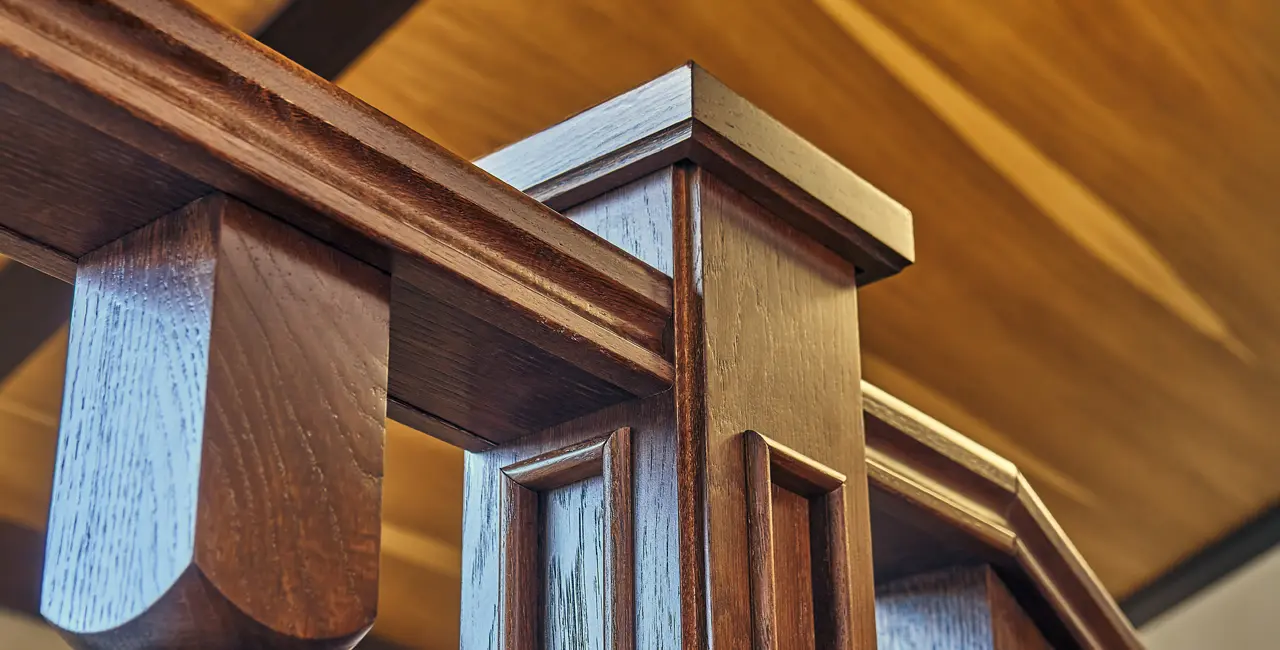
Function of handrails on wooden stairs
In interior stairways, the handrail acts as a protective element against the void and as a guide during ascent or descent. Its presence influences safety, but also the visual reading of the whole, marking the rhythm of the route and delimiting the space.
In systems where wood is the protagonist -as is the case in many wooden staircases-the railing is integrated as a natural extension of the design, reinforcing the coherence of the whole.
Types of handrails for wooden stairs
Solid wood railings
They are the most traditional and provide a warm and timeless character. They adapt especially well to classic or rustic interiors, where wood plays a leading role.
Mixed railings: wood and metal
They combine the warmth of wood with the strength of steel or iron. They are common in contemporary interiors and allow lighter designs without sacrificing stability.
Wooden railings with glass
Ideal for modern spaces, they provide security while maintaining a greater visual openness. They work very well in floating staircases or in homes with abundant natural light.
Design and proportion in interior railings
The design of the handrail should follow the layout of the staircase, respecting its inclination, the rhythm of the steps and the human scale. The handrail should be continuous and ergonomic, while the vertical elements or panels should be evenly distributed.
In stairs with special geometries, such as wooden spiral staircases, the continuity of the handrail and the correct adaptation to the turn are particularly important to ensure safety and comfort.
Technical behavior of wood
The wood used in railings must offer mechanical strength, dimensional stability and good wear behavior. Species such as oak, beech or ash have an adequate density to withstand continuous use.
Stability also depends on environmental factors such as humidity and temperature, as well as the correct application of protective treatments. Knowing how to varnish and protect wood is key to prolonging the life of the railing.
Professional criteria for choosing wooden railings
- Handrail height and ergonomics.
- Type of fastening and load capacity.
- Compatibility with the staircase design.
- Compliance with current safety regulations.
In Spain, these aspects are regulated by the Technical Building Code (CTE), which establishes minimum safety and accessibility requirements.
Conservation and maintenance
The maintenance of a wooden railing is not limited to surface cleaning. It is important to periodically check the joints, avoid excessively humid environments and renew the finish when it loses protection.
These tasks are part of indoor wood care, especially in areas of heavy use.
Frequently Asked Questions
Which wood is best suited for stair railings?
Hardwoods such as oak, beech or ash offer greater stability and resistance to continuous use.
What is the proper height for an interior railing?
It is generally between 90 and 100 cm, depending on the regulations in force and the design of the staircase.
Can wooden handrails be installed on narrow stairs?
Yes, in these cases lighter sections and continuous handrails are recommended so as not to reduce the feeling of spaciousness.
Does wood go well with metal or glass?
Yes, wood-metal or wood-glass combinations are very common in contemporary interiors.
Is it possible to restore an existing railing?
In many cases yes, by sanding, spot reinforcement and renewal of the protective finish.
Conclusion
Wood stair railings are a key element to ensure safety and aesthetic coherence in the interior of a home. Choosing the right design, wood and proper maintenance allows you to integrate protection and style in a single durable system.