
How to varnish and protect wood
Knowing how to prevent a wooden staircase from creaking is one of the most common questions in homes with natural wood structures. Over time, temperature changes, humidity, wear and tear, or poor installation can cause annoying noises when going up or down the stairs.
Although many people think these creaking noises are inevitable, there are actually several solutions to reduce or eliminate them completely. Furthermore, acting promptly helps prevent further wear and tear and improves both the safety and durability of the structure.
Likewise, good preventative maintenance is essential to preserve the stability of wooden stairs and properly protect each of their components.
Throughout this guide you will discover how to prevent a wooden staircase from creaking, what the most frequent causes are and what measures you can apply to effectively reduce noise.
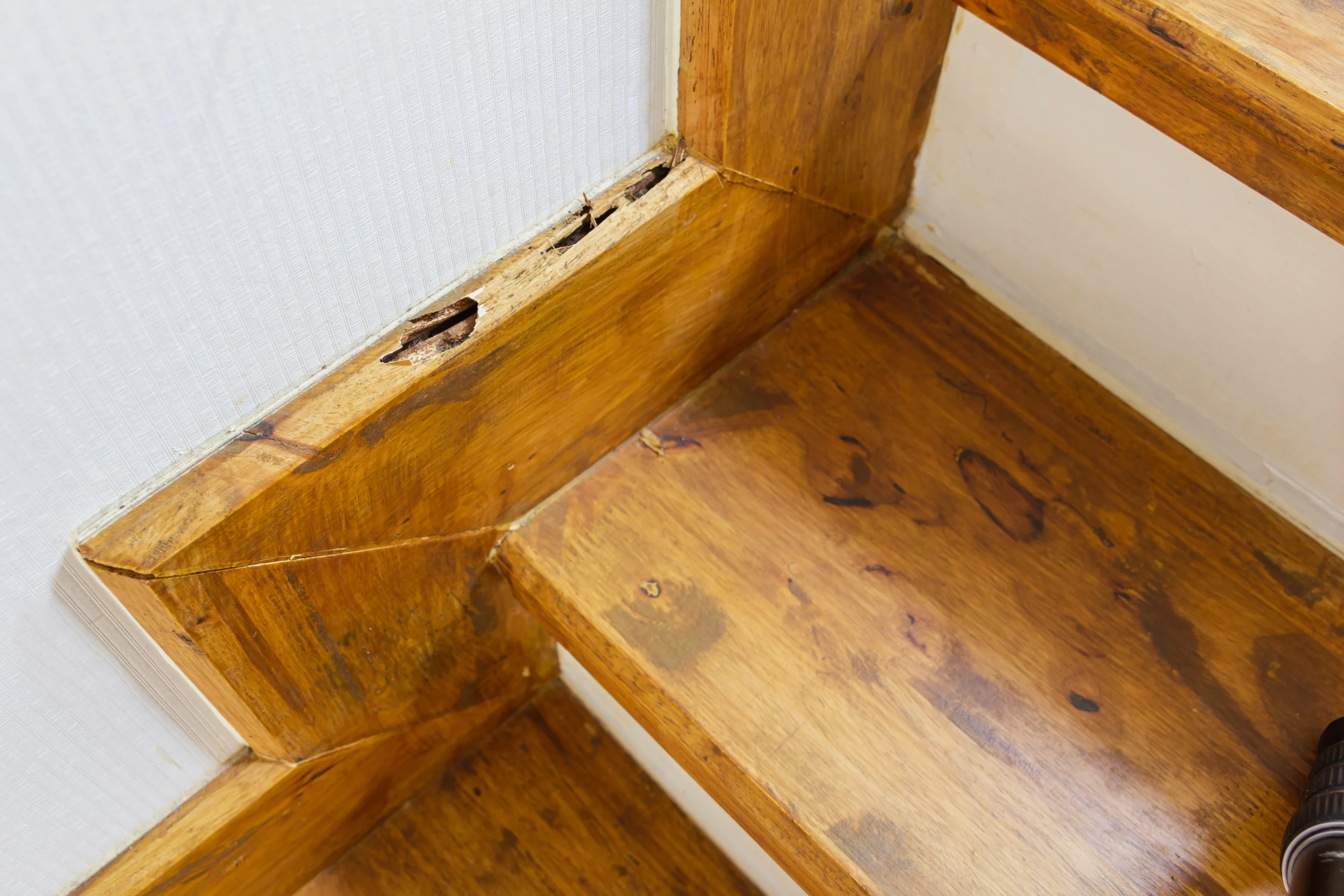
Why does a wooden staircase creak?
Creaking noises occur when parts of the staircase rub against each other while bearing weight or moving. This can happen in treads, joints, internal structures, or fixings that have lost stability over time.
Furthermore, wood is a natural material that constantly reacts to changes in humidity and temperature. For this reason, expansion and contraction can cause small structural movements that generate noise.
In many cases, the problem does not pose a serious risk. However, it may indicate that certain components need inspection or maintenance.
Factors that cause creaking in wood
There are several reasons why a staircase might start making noise. Therefore, before applying any solution, it’s helpful to understand what factors are typically behind the problem.
How to prevent a wooden staircase from creaking due to humidity
Ambient humidity causes wood to expand. Conversely, excessively dry environments can cause it to contract and create small gaps between pieces.
Creaking noises due to wear and tear and continuous use
Over time, daily use causes wear and tear on fixings, joints, and structural supports. As a result, some elements may shift slightly and produce noise.
Problems arising from improper installation
Poor installation can also cause movement between steps or structures from the very beginning. Therefore, the quality of the assembly directly affects the stability of the staircase.
Lack of preventive maintenance
The lack of regular maintenance encourages creaking, especially in high-traffic areas. Therefore, following a few guidelines for caring for wood at home helps prevent numerous problems related to wear and tear.
How to detect the source of noise in a wooden staircase
Before applying any solution, it is important to locate exactly which area of the staircase is causing the creaking. In this way, it is avoided to intervene on parts that do not cause the problem.
- Steps that sink slightly.
- Joints with movement.
- Unstable railings.
- Loose bindings.
- Areas where the wood rubs against each other.
Furthermore, correctly identifying the source of the problem allows for much more effective solutions and avoids unnecessary repairs.
How to prevent a wooden staircase from creaking
There are different solutions depending on the cause of the noise and the overall condition of the staircase. Therefore, simply applying a surface treatment is not always enough, as in some cases the problem lies in the structure or the fixings.
Adjust fixings and screws
In many cases, tightening screws or reinforcing anchors eliminates much of the movement that causes creaking. Furthermore, this inspection allows for the detection of loose parts before the problem worsens.
Apply specific lubricants
Some specialized products can reduce friction between pieces of wood. However, they should be used carefully and only in suitable areas to avoid damaging the finish.
Reinforce steps with movement
When the steps show excessive bending or movement, it may be necessary to reinforce the underlying structure. This improves the staircase’s stability and reduces noise.
Control ambient humidity
Maintaining adequate humidity levels helps reduce dimensional variations in wood. This minimizes the expansion and contraction that cause friction between pieces.
Renew the protective finish
Properly protecting the surface helps to better preserve the material’s stability. Therefore, it is advisable to periodically review how to properly varnish and protect wood.
Maintenance to prevent noise on wooden stairs
Preventive maintenance is one of the best ways to avoid future noise and extend the life of your staircase. It also allows you to detect minor problems before they become more complex repairs.
- Check fasteners periodically.
- Avoid moisture buildup.
- Apply protective treatments.
- Control the wear on the steps.
- Perform proper cleaning.
Likewise, a properly maintained staircase better preserves its stability, aesthetics, and structural safety.
According to the Forest Products Laboratory, controlling humidity and regular maintenance are essential to improving the durability of wood.
Common mistakes when repairing wooden stairs
Many people try to eliminate creaking noises using quick fixes that don’t actually solve the problem. As a result, the noise may return shortly afterward.
- Applying unsuitable products.
- Not identifying the real source of the noise.
- Ignoring humidity problems.
- Using incorrect fasteners.
- Do not review the entire structure.
For this reason, when creaking noises are persistent or increase over time, it is advisable to consult with specialized professionals.
Frequently asked questions about how to prevent a wooden staircase from creaking
Is it normal for a wooden staircase to creak?
Yes. Wood can generate small noises due to changes in temperature, humidity, or natural wear and tear.
Does humidity affect creaking?
Yes. Changes in humidity cause expansion and contraction that can generate movement between pieces.
Can creaking be completely eliminated?
In many cases, yes, especially when the problem is detected early and an appropriate solution is applied.
Does maintenance help prevent noise?
Yes. Checking fixings, protecting the wood, and controlling humidity significantly reduces the occurrence of creaking.
Conclusion: How to prevent a wooden staircase from creaking
Fixing creaking noises in a wooden staircase improves the comfort, stability, and durability of the structure.
In addition, correctly identifying the causes of the noise and applying proper maintenance helps to keep the wood in better condition for many years.
At WorldStairs we work with wood solutions designed to offer strength, safety and durable finishes adapted to each space.