
Handcrafted wooden stair railings
Exclusive design and custom manufacturing
Handcrafted wooden stair railings represent a different approach to stair construction. Unlike mass-produced or standardized systems, a handcrafted railing is designed to perfectly suit the project, respecting the architecture of the home, the characteristics of the staircase, and the style of those who will enjoy it for many years to come.
Beyond its function as a protective element, a handcrafted railing forms part of the architectural ensemble of a home. The choice of wood, the continuity of the grain, the design of the handrail, the joints between pieces, and the final finish determine both its structural performance and its aesthetic value.
In this guide, we analyze what truly distinguishes a handcrafted railing from a standard solution, what aspects to consider before manufacturing, and why this type of project remains one of the best options when seeking a completely customized staircase. Within the vast world of wooden stair railings, handcrafted solutions stand out for their ability to be fully customized to each project.
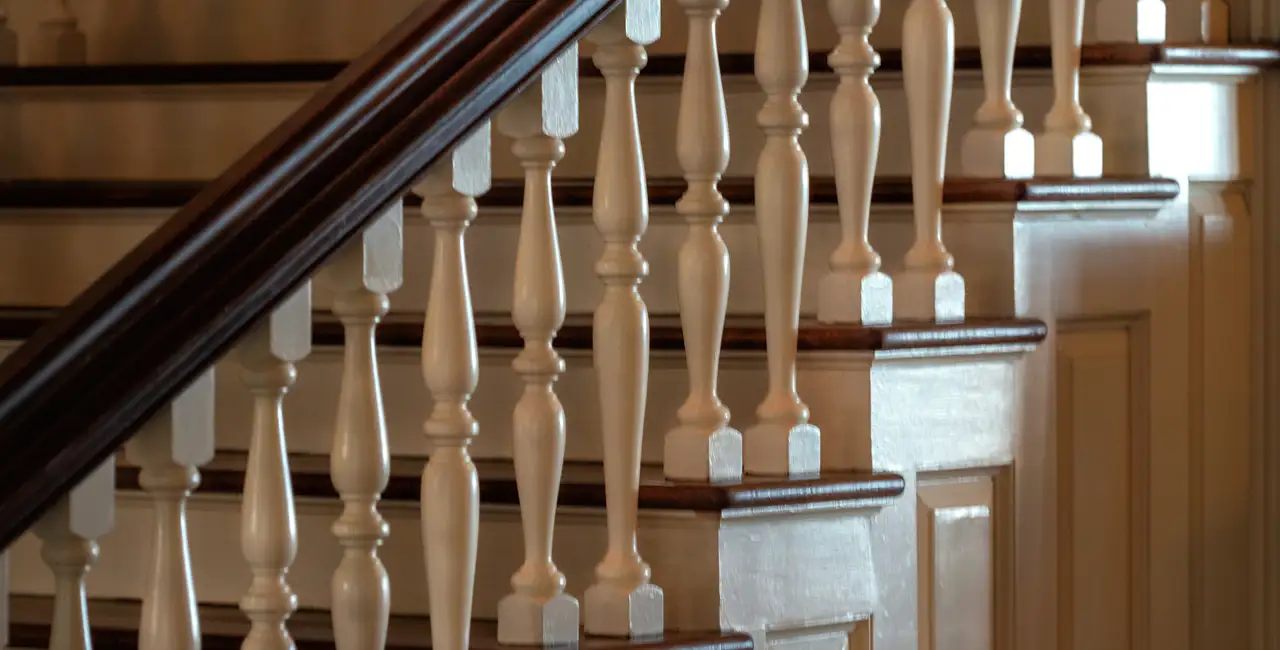
Table of Contents
- What do we mean by a handcrafted railing?
- What differentiates artisanal manufacturing from industrial manufacturing?
- Advantages of a handcrafted railing
- Which woods offer the best results?
- Custom design and integration with the staircase
- How to make a handcrafted railing
- What do we usually consider before making a handcrafted railing?
- Maintenance and conservation
- Common mistakes when choosing a handcrafted railing
- Conclusion
What do we mean by a handcrafted railing?
Talking about a handcrafted railing doesn’t simply mean making a piece of wood. It means developing a solution tailored to the space, where each element is sized, machined, and adjusted with a specific staircase in mind, not for mass production.
The experience of a wooden staircase manufacturer is especially important in this type of project, as it allows every detail of the railing to be adapted to the existing structure, guaranteeing both safety and an aesthetic integration consistent with the overall staircase.
The difference begins long before the manufacturing process. Each project starts with a study of the opening, the type of staircase, the natural lighting, and the style of the home to ensure that the railing is an integral part of the whole and doesn’t appear to be an afterthought.
Within the set of wooden railings, handcrafted solutions allow for complete adaptation of the design, proportions, and finishes, achieving a much more natural integration with the rest of the staircase.
When a project requires a completely customized solution, our bespoke wooden railings allow us to develop every detail specifically for the needs of each home.
What differentiates artisanal manufacturing from industrial manufacturing?
Industrial manufacturing aims to replicate the same model thousands of times. Handcrafted manufacturing pursues the exact opposite: adapting each piece to the specific project.
That doesn’t mean sacrificing precision. On the contrary. Today, handcrafted manufacturing combines the maker’s experience with modern machining processes, achieving a level of quality far superior to that of many fully standardized solutions.
In a handcrafted railing, the continuity of the handrail, the grain direction, the joints between slats or balusters, the ergonomics of the grip, and the integration with the steps are all carefully considered. These are small details that barely attract attention when well executed, but they make a huge difference in the final result.
Precisely because of this adaptability, this type of railing is often used both in newly built homes and in renovation projects where each staircase has different dimensions.
Advantages of a handcrafted railing
A handcrafted railing offers advantages that go far beyond aesthetics. The main one is the ability to completely adapt the design to the available space.
This allows for the resolution of complex intersections, changes of direction, landings, open spaces, or staircases with special geometries without resorting to improvised solutions.
Another important advantage is the ability to carefully select the wood and maintain continuity between the different visible pieces. In high-end projects, this aspect is especially important because it provides a sense of quality that is difficult to achieve with mass-produced components.
Furthermore, custom manufacturing allows the railing to evolve alongside the rest of the staircase. When the treads, handrail, and safety features are designed as a single unit, the result conveys greater architectural coherence.
In complete renovations, it is common to combine the manufacture of the railing with solutions for wooden-clad staircases, allowing a complete renovation of an existing structure without the need to replace the entire staircase.
Which woods offer the best results?
The choice of wood largely determines the future performance of the railing. Not all species respond equally to continuous use, environmental changes, or the intended finish.
Oak remains a favorite choice due to its hardness, stability, and natural beauty. Beech allows for very uniform and luminous finishes, while walnut lends a more exclusive character thanks to its dark tones and rich grain.
Even more important than the species is the quality of the material used. Properly dried, stabilized, and machined wood will offer much more reliable performance than wood of inferior quality, regardless of the species chosen.
This same philosophy of material selection is what we apply in the manufacture of wooden steps, where stability and machining precision are fundamental to achieving a durable staircase.
Custom design and integration with the staircase
A handcrafted railing should not be designed in isolation. Its function is to complement the staircase and enhance both its safety and its architectural presence.
That is why it is essential to jointly study the slope of the section, the width of the steps, the lighting and the visual relationship between the different spaces of the house.
Contemporary staircases often strive for a light and clean aesthetic, while more classic designs tend to feature balusters, moldings, and handrails with larger profiles. In both cases, the goal is the same: to achieve a seamless integration with the overall design of the home.
This approach is especially important in modern wooden staircase projects, where each element contributes to defining the personality of the space.
How to make a handcrafted railing
The process begins with taking measurements and studying the existing staircase or the architectural plans. Based on this information, the design, sections, joints, and most suitable type of wood are defined.
The parts are then selected, precision machined, and adjusted as needed before final assembly. During this phase, it is especially important to maintain visual continuity between the different parts and ensure the dimensional stability of the entire structure.
Finally, surface treatments and finishes are applied that will protect the wood for years, preserving both its appearance and its mechanical properties.
What do we usually consider before making a handcrafted railing?
One of the differences between manufacturing a standard railing and developing a completely customized project is the number of decisions that need to be made before starting the work.
Maintenance and conservation
A well-crafted, handcrafted railing is designed to grace a home for decades. However, like any element made of natural wood, it requires regular maintenance to preserve both its appearance and its structural integrity.
Regular cleaning should be done with products specifically designed for wood, always avoiding excess moisture. It is also advisable to periodically check the condition of the protective finish, especially in homes with large windows or where sunlight is intense.
In addition to the superficial appearance, it is advisable to occasionally check the firmness of the fixings and the behavior of the handrail. A properly manufactured railing should be free of movement or noise during normal use.
General recommendations for caring for wood at home help keep these types of installations in perfect condition for many years. When the protective finish begins to lose its effectiveness, knowing how to properly varnish and protect the wood allows you to restore both its protection and natural beauty.
Common mistakes when choosing a handcrafted railing
One of the most common mistakes is thinking that a handcrafted railing is distinguished solely by its appearance. In reality, its true value lies in all the prior work involved in design, material selection, and adaptation to the staircase.
It’s also common to focus solely on the wood species when choosing a material, overlooking much more important aspects such as material stability, drying quality, continuity between pieces, and the fastening system. All of these directly influence the installation’s durability.
Another common mistake occurs when the railing is designed without considering the rest of the staircase. Steps, handrail, structure, and lighting should all be understood as a single unit. When all these elements are designed together, the result conveys a much higher sense of quality.
Finally, it’s wise to be wary of seemingly handcrafted solutions that actually use completely standardized components. Genuine custom manufacturing adapts proportions, joints, and finishes to the specific characteristics of each project.
Conclusion
Handcrafted wooden stair railings represent a manufacturing approach based on personalization, high-quality materials, and meticulous attention to detail. Beyond their function as a safety feature, they contribute to defining the character of the home and integrating the staircase into the overall architecture.
When design, wood selection, and manufacturing are approached as a single process, the result is a railing capable of maintaining its stability, beauty, and functionality for many years. This difference is precisely what transforms a handcrafted solution into a long-term investment.
Questions our customers often ask us
What really differentiates a handcrafted railing from a mass-produced one?
The main difference is that a handcrafted railing is designed specifically for a specific staircase. It adapts to the dimensions of the project, allows you to select the wood, personalize the design and resolve each encounter individually, achieving a much more natural integration than a standard solution.
What type of wood usually offers the best results for making a handcrafted railing?
Oak remains one of the most widely used species due to its strength, stability, and aesthetic appeal. Beech and walnut are also common, depending on the style of the house and the desired finish. More important than the species is using properly dried and machined wood.
Is it worth having a railing completely custom-made?
Yes, especially when the staircase has unusual dimensions, changes direction, or when seamless integration with the rest of the house is desired. Custom manufacturing allows every detail to be tailored to the project, resulting in a much more balanced outcome from both a technical and aesthetic perspective.
Can handcrafted elements be combined with metal structures?
Absolutely. One of the current trends is to combine handcrafted wooden handrails and elements with clean-lined metal structures. This solution allows you to unite the warmth of wood with the strength and visual lightness of metal.
Does a handcrafted railing require more maintenance than an industrial one?
Not necessarily. If the wood has been properly selected and protected with quality finishes, maintenance will be very similar. The difference lies in the fact that a handcrafted piece generally lends itself better to future restorations and repairs without losing its aesthetic value.
Can a handcrafted railing be made for an existing staircase?
Yes. In fact, many renovation projects consist precisely of preserving the structure of the staircase and replacing the railing with a completely customized solution, adapted to the new aesthetic and functional needs of the home.