
To cover a brick staircase with wood
When is it worth it and how to do it correctly?
Cladding a brick staircase with wood is one of the most effective solutions for completely transforming the look of a home without undertaking a complex structural renovation. When the concrete base is in good condition, the wood cladding adds warmth, enhances the aesthetics, and updates the overall design of the space.
Within the range of wooden staircases, cladding is a very interesting alternative in renovations, especially when seeking a modern result without replacing the entire structure.
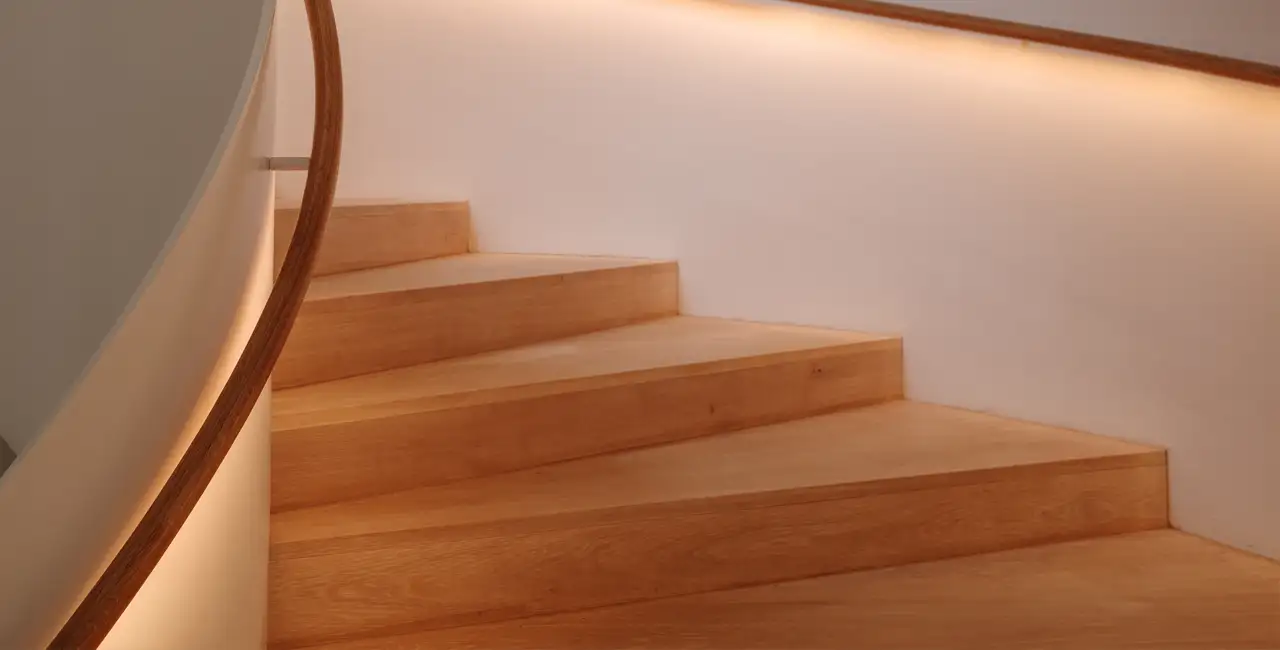
Table of Contents
- When is it worthwhile to cover a staircase?
- Advantages of wood cladding
- What materials to use
- Technical lining process
- Common mistakes to avoid
- Alternatives to full lining
- Frequently Asked Questions
- Conclusion
When is it worthwhile to cover a staircase?
Lining is recommended when the basic structure is in good condition, but the finish is cold, outdated, or poorly integrated with the current design.
In many renovations, simply replacing the stair treads is enough to transform the entire perception of the space.
Along with floating wooden stairs, cladding is also a common solution in homes where a result more in line with contemporary styles is sought, such as those we described in our article on modern wooden stairs.
Advantages of wood cladding
- It adds warmth and improves the aesthetic perception.
- It allows you to update your home without structural work.
- It reduces renovation times compared to complete replacement.
- Possibility of choosing custom woods and finishes.
Furthermore, by working with pieces manufactured specifically for the project, each step can be adapted to the actual geometry of the staircase.
What materials to use
The choice of material is key. Woods such as oak or beech offer good resistance to wear and tear and dimensional stability.
In our stair tread shop we have box-type and solid solutions that can be adapted to cladding projects, especially in renovations of construction staircases.
Technical lining process
The professional process includes:
- Precise measurement of each step.
- Adapting parts to existing irregularities.
- Secure fixing using appropriate systems.
- Finishing and final adjustment to ensure stability.
Incorrect installation can cause noise, looseness, or movement over time, so it’s best to opt for precise manufacturing and professional installation.
Common mistakes to avoid
- Do not check previous leveling.
- Choosing wood that is unsuitable for the intended use.
- Do not take into account natural expansion of the material.
- Neglecting the protective finish.
A significant part of the final result depends on how the new steps are positioned on the existing structure, as improper installation can lead to movement or creaking over time. The complete process can be found in this guide on how to install wooden steps correctly.
Alternatives to full lining
In some cases, it may be enough to replace only the visible steps or renew the railing to update the aesthetics without intervening in the entire staircase.
Frequently Asked Questions
Can any concrete staircase be covered?
Provided the structure is in good condition and properly leveled, lining is feasible.
Does the lining increase the height of the step?
Yes, slightly. That’s why it’s important to recalculate proportions to maintain comfort.
Which wood is most recommended?
Hardwoods like oak offer greater resistance to traffic.
Is it necessary to treat the wood after assembly?
The protective finish is essential to ensure durability.
Conclusion
Cladding a brick staircase with wood is an effective solution for modernizing a space without replacing the entire structure. Choosing the right materials and opting for professional workmanship guarantees a durable and well-executed result.
If you are considering this option, you can check out our solutions in the online store or request advice to adapt the project to your needs.