
Wooden and metal railings
Contemporary design, strength and warmth to create modern staircases and visually balanced spaces
Wooden and metal railings have become one of the most popular solutions for modern interior staircases, contemporary homes, and renovation projects where aesthetics, safety, and durability are paramount. Wood provides warmth, texture, and a natural presence; metal adds strength, structural precision, and a lighter, more modern look.
This combination works particularly well in open staircases, lofts, double-height spaces, and homes where the staircase is not only a functional element but also a key piece of the interior design. Within the range of wooden stair railings, mixed solutions stand out for their ability to adapt to industrial, minimalist, Nordic, or contemporary styles.
In this guide we analyze what advantages mixed railings offer, what materials are used, what technical criteria should be reviewed and when it is worth opting for custom-made railings.
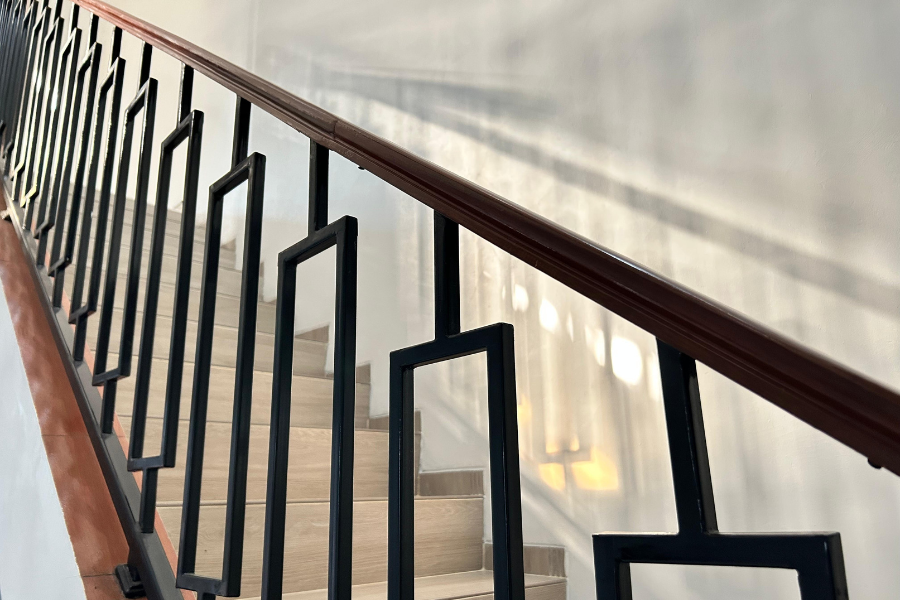
Table of Contents
- Why combine wood and metal in a railing?
- Technical and aesthetic advantages of mixed railings
- Most commonly used styles of wood and metal railings
- Which wood to choose for a mixed railing
- Which metal to use: steel, iron or stainless steel
- Safety, regulations and ergonomics
- Integration with modern, floating staircases
- Custom manufacturing: when is it recommended
- Wood and metal maintenance
- Common mistakes when choosing wooden and metal railings
- Frequently Asked Questions
- Conclusion
Why combine wood and metal in a railing?
The combination of wood and metal allows you to solve a very common need in interior design: creating a safe and sturdy railing without sacrificing a warm and visually light aesthetic. The wood softens the overall look, provides a pleasant feel, and connects with other interior elements, such as steps, flooring, or wall coverings. The metal, for its part, allows for thinner sections, straight lines, and very stable structural systems.
On a staircase, the railing should not be seen as an afterthought. It is an integral part of the whole and should complement the steps, the layout, the lighting, and the style of the home. This relationship is especially important in modern wooden staircase projects, where every element influences the final perception of the space.
Wood and metal work well together because they balance two distinct sensations: the naturalness of the noble material and the precision of a contemporary structure. The result can be understated, industrial, elegant, or minimalist, depending on the wood section, the metal’s color, and the wood’s finish.
Technical and aesthetic advantages of mixed railings
Wooden and metal railings offer advantages from both a functional and design perspective. They are not just a decorative solution: well-designed, they provide safety, strength, and style in a single system.
From a technical standpoint, metal provides rigidity, stability, and fastening capabilities. This allows for cleaner, less bulky structures than a railing made entirely of wood. Wood, on the other hand, is very suitable for handrails, trims, or contact areas, as it offers a warmer and more comfortable feel.
From a visual standpoint, this combination lightens the staircase and prevents the railing from appearing too heavy. In homes with open spaces or abundant natural light, the thin metal profiles combined with wood help maintain a greater sense of spaciousness.
In the factory, one of the most important issues is properly coordinating both materials. Wood and metal do not behave the same way when faced with changes in temperature, humidity, or mechanical stress, so the joints, fixings, and connections must be resolved with precision.
Most commonly used styles of wood and metal railings
One of the reasons why mixed railings are so popular is their aesthetic versatility. They can be adapted to contemporary homes, industrial interiors, renovations of traditional houses, or minimalist projects.
Railings with black metal and natural wood
It’s one of the most popular combinations right now. Black metal adds contrast, definition, and an industrial touch, while natural wood prevents the overall effect from feeling cold. It works especially well with oak, beech, or warm-toned stair treads.
Minimalist railings with thin metal profiles
Minimalist designs favor clean lines, understated sections, and a light visual integration. Metal allows for the creation of thin, repetitive profiles, while wood can be reserved for handrails or specific details.
Wooden slat railings with metal frame
The vertical wooden slats create visual rhythm, a sense of continuity, and a greater feeling of security. When combined with a metal frame, they form a stable and contemporary system, especially suitable for modern interiors.
Industrial railings
In loft-style homes, urban renovations, or spaces with an industrial aesthetic, metal can have a stronger visual presence. Wood helps to balance the overall effect so that the staircase doesn’t appear too cold or harsh within the home.
Which wood to choose for a mixed railing
The choice of wood influences the strength, feel, durability, and overall aesthetic coherence of the structure. In a mixed-material railing, wood is typically used for handrails, slats, finials, or other visible elements that come into direct contact with the user.
Oak is one of the most common choices due to its durability, stability, and visual presence. It works very well in contemporary interiors and combines especially well with black metal or lacquered steel. Beech offers a more uniform and luminous aesthetic, suitable for lighter interiors or Nordic designs. Walnut, on the other hand, provides a more elegant and sophisticated look, although it is usually reserved for projects with more demanding aesthetic requirements.
In all cases, the wood must be properly dried, machined, and protected. Just as with wooden stair treads, choosing the right species isn’t enough: the manufacturing and finishing processes largely determine the final result.
Which metal to use: steel, iron or stainless steel
The metal used in a railing should be chosen according to the design, its use, and the level of exposure. Indoors, lacquered steel is one of the most common solutions due to its durability and the ability to be finished in different ways. Matte black is especially popular in modern interiors, although white, gray, or more industrial finishes can also be used.
Iron can work well in projects with a more traditional or artisanal aesthetic, but it requires adequate protection to prevent surface deterioration. Stainless steel, while more common in environments where greater resistance to humidity is desired, can also be used indoors when a more technical or contemporary finish is desired.
Beyond the material itself, what’s important is that the sections, welds, fixings, and connections are well executed. A visually appealing railing can lose its quality if it transmits vibrations, has an uncomfortable handrail, or features poorly executed fixings.
Safety, regulations and ergonomics
The railing has one main function: to protect against falls and facilitate the safe use of the staircase. Therefore, its design should not be based solely on aesthetics. Height, spacing between elements, continuity of the handrail, and the strength of the fixings are fundamental aspects.
The handrail should be comfortable to grip and positioned at an appropriate height. In homes with children, elderly people, or where it is used frequently, special attention should be paid to the spacing between vertical elements and the ease of support along its entire length.
In stair projects, the railing must be coordinated with the layout and geometry of the entire structure. In spiral staircases, for example, the continuity of the handrail and its adaptation to the turn are especially important. In straight or L-shaped staircases, the regularity of the path and the connections to landings become more significant.
Integration with modern, floating staircases
Wooden and metal railings are a particularly good fit for contemporary staircases. In a modern staircase, the railing should not visually overwhelm the overall design, but rather complement the lines of the flight and provide safety with minimal interference.
In the case of floating wooden staircases, this integration is even more delicate. Since these designs feature steps that appear suspended, the railing must provide protection without compromising the feeling of lightness. This is why combinations of thin metal, wood for the handrail, and, in some cases, glass are frequently used.
When the railing complements the staircase design, the overall effect appears cleaner, safer, and more cohesive. When it doesn’t, even a well-designed staircase can lose its visual appeal.
Custom manufacturing: when is it recommended
Wooden and metal railings often require precise adaptation to the space. Each staircase has a specific incline, dimensions, intersections, and fixing requirements. Therefore, in many projects, a standard solution does not offer the best result.
Custom manufacturing allows for adjustments to height, sections, spacing between elements, type of handrail, wood finish, and metal color. It also allows for proper solutions for junctions with walls, landings, mezzanines, or double-height spaces.
As manufacturers of staircases and wooden elements, we understand the railing as part of the complete system, not as an isolated piece. This approach is important in projects where treads, railing, and structure are combined, as is the case in many custom-made wooden staircases.
Wood and metal maintenance
Maintaining a mixed-material railing depends on the materials and finishes used. The wood should be cleaned with mild products and protected from excessive moisture, impacts, and surface wear. If the finish loses its protective coating, it can be renewed by lightly sanding and applying a suitable varnish or oil.
The metal requires regular cleaning and checking for possible scratches, bumps or areas where the lacquer has deteriorated. Indoors, the risk of corrosion is usually low if the material is well protected, but it is advisable to check the fixings and joints periodically.
The general guidelines for caring for wood at home also apply to handrails and balustrades. In projects where the wood is subject to heavy use, knowing how to varnish and protect it helps extend the life of the finish.
Common mistakes when choosing wooden and metal railings
One of the most common mistakes is choosing a handrail solely for its appearance, without considering its ergonomics or performance in daily use. A handrail can be visually appealing and yet be uncomfortable to grip or feel unsafe.
Another common mistake is failing to coordinate the design with the staircase. The type of tread, the incline, the width of the flight, and the presence of landings all influence the most suitable solution. It’s also advisable to avoid overly weak profiles or poorly installed fixings, as these can generate vibrations or a feeling of instability.
Finally, maintenance should not be neglected. The combination of wood and metal is very durable if properly protected, but both materials require appropriate finishes and regular inspections.
Frequently asked questions about wooden and metal railings
Why are wooden and metal railings so popular in contemporary architecture?
Because they combine two materials with complementary properties. Wood provides warmth, comfort, and a natural finish, while metal allows for the creation of strong and visually light structures. This combination is especially well-suited to modern homes, where a balance between design, functionality, and security is sought.
What type of wood offers the best results in a mixed railing?
The most commonly used wood species are oak, beech, and walnut due to their dimensional stability, mechanical strength, and excellent performance under daily use. The choice will depend on the style of the house, the desired finish, and the type of staircase where the railing will be installed.
What advantages does a wooden and metal railing have over one made entirely of wood?
The incorporation of metal elements allows for a reduction in the structure’s thickness, increased overall rigidity, and visually lighter designs. Furthermore, metal facilitates contemporary solutions that are difficult to achieve with wood alone, while maintaining the material’s characteristic warmth.
Are wooden and metal railings suitable for floating staircases?
Yes. In fact, they are one of the most common solutions for floating staircases because they enhance safety without sacrificing the light and airy feel characteristic of this type of design. The combination of discreet metal profiles with wooden handrails achieves a balance that is highly valued in contemporary architecture.
What maintenance does a wooden and metal railing need?
Maintenance is relatively simple. The wood should be cleaned with mild products and its protective finish renewed periodically as needed, while the metal only requires occasional checks to inspect the condition of the lacquer or joints. With proper maintenance, both materials can retain their appearance for many years.
When is it advisable to manufacture a completely custom-made railing?
Custom manufacturing is the most recommended option when the staircase has special dimensions, changes of direction, landings, open spaces, or specific aesthetic requirements. It is also advisable when perfect integration with the design of the house or with the other wooden elements is desired.
Conclusion
Wooden and metal railings are one of the most well-rounded solutions for modern interior staircases. They combine strength, safety, contemporary design, and natural warmth, offering a versatile and long-lasting result.
Choosing the right wood, metal, fixing system, and handrail design allows you to create a railing that is consistent with the staircase and the style of the home. When considered as part of the whole, rather than an isolated element, the railing improves both safety and the aesthetic appeal of the space.